Building a high-performing design team
Building a high-performing design team
Feb 2022,
I joined Appsmith as the Head of Design (Director level) with an intent to build one of the best low-code platforms to enable thousands of people to build internal apps, efficiently. In order to do that, we needed to have a sharp design team that could strategize and execute at many levels.
This piece is an overview of the many things that I had done in my capacity as a Design leader to build a high-performing Design team.
Feb 2022,
I joined Appsmith as the Head of Design (Director level) with an intent to build one of the best low-code platforms to enable thousands of people to build internal apps, efficiently. In order to do that, we needed to have a sharp design team that could strategize and execute at many levels.
This piece is a brief overview of the many things that I had done in my capacity as a Design leader to build a high-performing Design team. While there were milestone features that were successful, I'd say building this team is probably my biggest achievement. And, one that I fondly look back to.
Duration
Feb, 2022 - May, 2025
Responsibilities
Design Leadership
Impact
Created a strong & resilient design team with high talent density and one that ships with high quality.
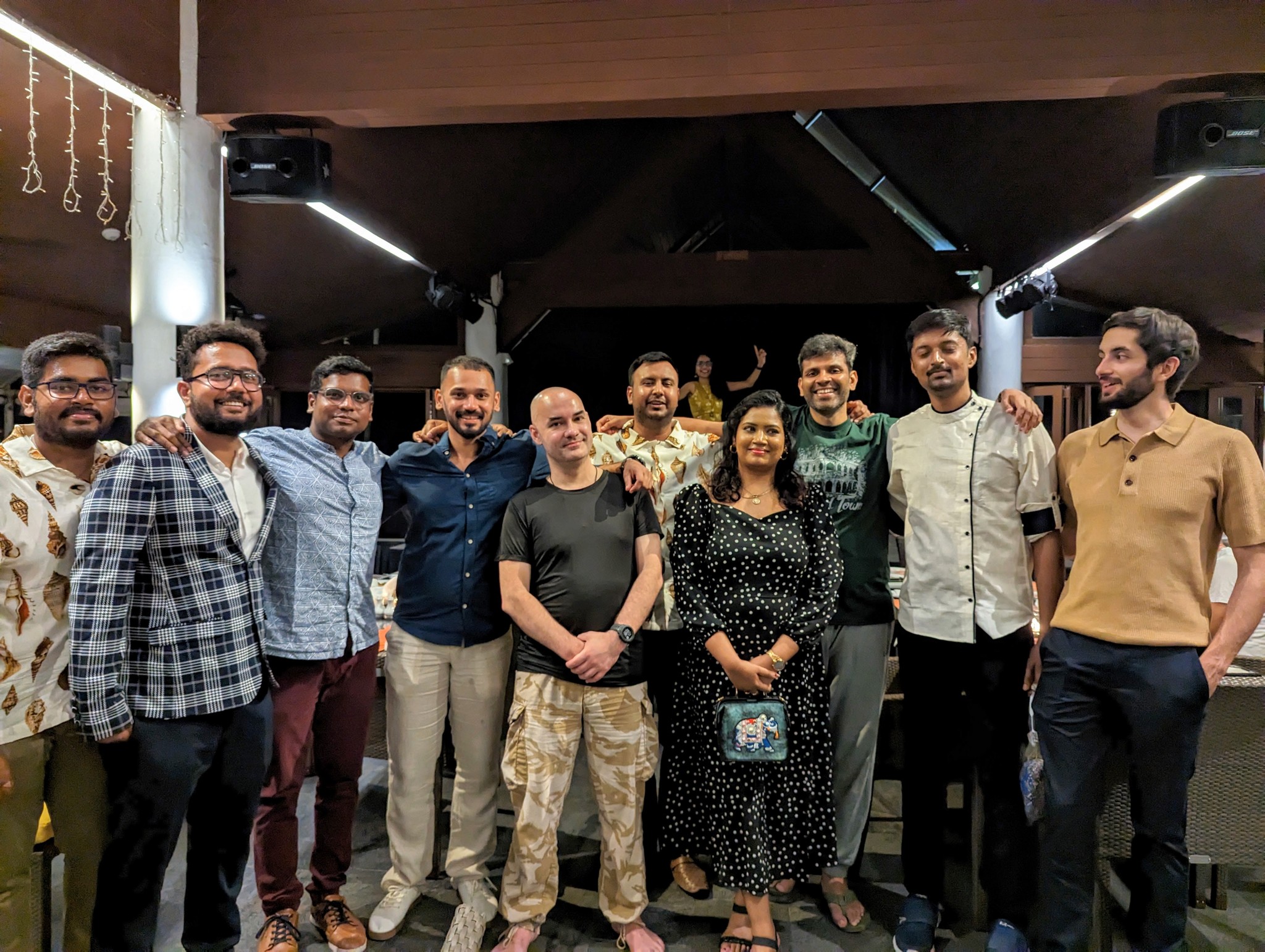
Understanding the Team
As I started my journey as the Head of Design at Appsmith, I did one-on-ones with each of my team to understand who they are, what aspects of Design are they interested in and if they are able to flex their muscles in those areas, w.r.t work they have been doing at the Organisation.
I later asked them to present their previous work to me to understand their process. In addition to assessing their skill, I was keen to understand why they chose Appsmith and what is it that resonates with them about the company's mission.
An important thing that I had done was to check their portfolio of work prior to joining the company and realised a key insight: People who were majorly UI designers have been hired and were expected to product design work. In some cases, this involved having core UX skills like information architecture which they were simply not equipped with!
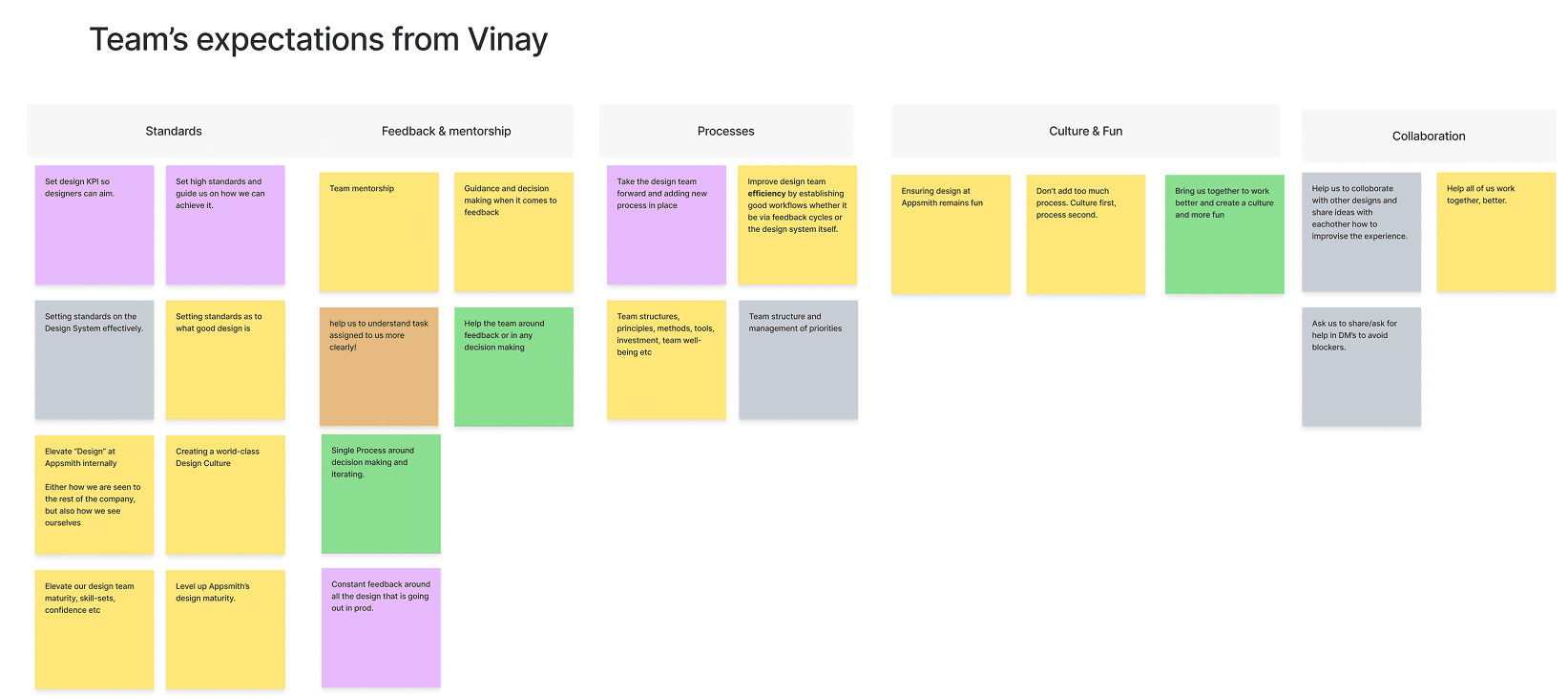
I asked my team about what is it that they expect from a Design leader and got a bunch of aspects to start digging into.
Similarly, I did 1-1s with key stakeholders in the organisation to understand their challenges with the Design team.
Understanding the Team
As I started my journey as the Head of Design at Appsmith, I did one-on-ones with each of my team to understand who they are, what aspects of Design are they interested in and if they are able to flex their muscles in those areas, w.r.t work they have been doing at the Organisation.
I later asked them to present their previous work to me to understand their process. In addition to assessing their skill, I was keen to understand why they chose Appsmith and what is it that resonates with them about the company's mission.
An important thing that I had done was to check their portfolio of work prior to joining the company and realised a key insight: People who were majorly UI designers have been hired and were expected to product design work. In some cases, this involved having core UX skills like information architecture which they were simply not equipped with!
I asked my team about what is it that they expect from a Design leader and got a bunch of aspects to start digging into.
Similarly, I did 1-1s with key stakeholders in the organisation to understand their challenges with the Design team.
Understanding the Team
As I started my journey as the Head of Design at Appsmith, I did one-on-ones with each of my team to understand who they are, what aspects of Design are they interested in and if they are able to flex their muscles in those areas, w.r.t work they have been doing at the Organisation.
I later asked them to present their previous work to me to understand their process. In addition to assessing their skill, I was keen to understand why they chose Appsmith and what is it that resonates with them about the company's mission.
An important thing that I had done was to check their portfolio of work prior to joining the company and realised a key insight: People who were majorly UI designers have been hired and were expected to product design work. In some cases, this involved having core UX skills like information architecture which they were simply not equipped with!
I asked my team about what is it that they expect from a Design leader and got a bunch of aspects to start digging into.
Similarly, I did 1-1s with key stakeholders in the organisation to understand their challenges with the Design team.
It is all about the FIT
In addition to the experience gap, there was also a skill gap.
The other problem is that people who were junior or mid-level designers were assigned to pods that required complex skills. There was big disconnect in terms of the fit with respect to a designer's skill level vs. problem complexity.
Having realised that people haven't been placed right with respect to their strengths — I proposed to the CEO (who I reported to) that I'm going to shuffle people based on where I think they would work best according to their strengths. And to address the aspect of designer's skill mismatch - I proposed to coach them to get to speed.
Appsmith only had product designers. I convinced the CEO to try a model of having UI designers paired with product designers. This way, people who were strong in UI would shine and also imbibe how the product designers were operating. I wanted to see how this would play out for 2-3 months.
One of the UI designers, whose performance was lacking in their product design duties, performed so well, his motivation improved and went to play a crucial role in building a design system for Appsmith. A big win!
It is all about the FIT
In addition to the experience gap, there was also a skill gap.
The other problem is that people who were junior or mid-level designers were assigned to pods that required complex skills. There was big disconnect in terms of the fit with respect to a designer's skill level vs. problem complexity.
Having realised that people haven't been placed right with respect to their strengths — I proposed to the CEO (who I reported to) that I'm going to shuffle people based on where I think they would work best according to their strengths. And to address the aspect of designer's skill mismatch - I proposed to coach them to get to speed.
Appsmith only had product designers. I convinced the CEO to try a model of having UI designers paired with product designers. This way, people who were strong in UI would shine and also imbibe how the product designers were operating. I wanted to see how this would play out for 2-3 months.
One of the UI designers, whose performance was lacking in their product design duties, performed so well, his motivation improved and went to play a crucial role in building a design system for Appsmith. A big win!
It is all about the FIT
In addition to the experience gap, there was also a skill gap.
The other problem is that people who were junior or mid-level designers were assigned to pods that required complex skills. There was big disconnect in terms of the fit with respect to a designer's skill level vs. problem complexity.
Having realised that people haven't been placed right with respect to their strengths — I proposed to the CEO (who I reported to) that I'm going to shuffle people based on where I think they would work best according to their strengths. And to address the aspect of designer's skill mismatch - I proposed to coach them to get to speed.
Appsmith only had product designers. I convinced the CEO to try a model of having UI designers paired with product designers. This way, people who were strong in UI would shine and also imbibe how the product designers were operating. I wanted to see how this would play out for 2-3 months.
One of the UI designers, whose performance was lacking in their product design duties, performed so well, his motivation improved and went to play a crucial role in building a design system for Appsmith. A big win!
Introducing a design process to level-up
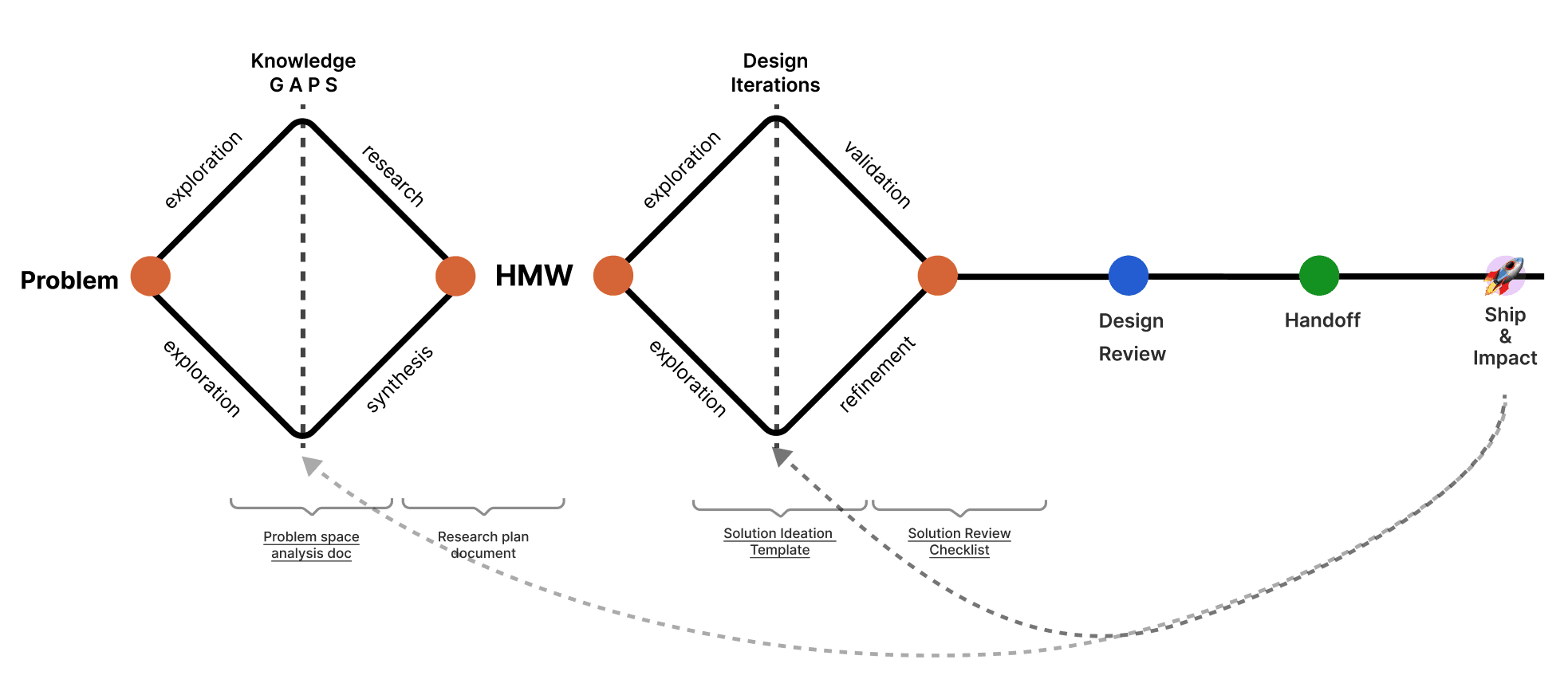
A simple design process with guidance documents at every step
To address the issue of low skill and enable people to produce intentional design outcomes, I introduced a design process in the Org. I was keenly aware of introducing processes so that it doesn't interfere with agility of the working environment.
Introducing this process was a response to a major observation: Almost all the designers being eager to get to solutioning without spending enough time in unpacking the problem.
Process is a means to an end, not the end itself. It's a proxy for producing quality results consistently. I did not make the process prescriptive while I do have it as a strong guideline.
I created a set of process templates that help a person to not only dig deep at the problem-space but have rigour in their solutions.
Introducing a design process to level-up
A simple design process with guidance documents at every step
To address the issue of low skill and enable people to produce intentional design outcomes, I introduced a design process in the Org. I was keenly aware of introducing processes so that it doesn't interfere with agility of the working environment.
Introducing this process was a response to a major observation: Almost all the designers being eager to get to solutioning without spending enough time in unpacking the problem.
Process is a means to an end, not the end itself. It's a proxy for producing quality results consistently. I did not make the process prescriptive while I do have it as a strong guideline.
I created a set of process templates that help a person to not only dig deep at the problem-space but have rigour in their solutions.
Introducing a design process to level-up
A simple design process with guidance documents at every step
To address the issue of low skill and enable people to produce intentional design outcomes, I introduced a design process in the Org. I was keenly aware of introducing processes so that it doesn't interfere with agility of the working environment.
Introducing this process was a response to a major observation: Almost all the designers being eager to get to solutioning without spending enough time in unpacking the problem.
Process is a means to an end, not the end itself. It's a proxy for producing quality results consistently. I did not make the process prescriptive while I do have it as a strong guideline.
I created a set of process templates that help a person to not only dig deep at the problem-space but have rigour in their solutions.
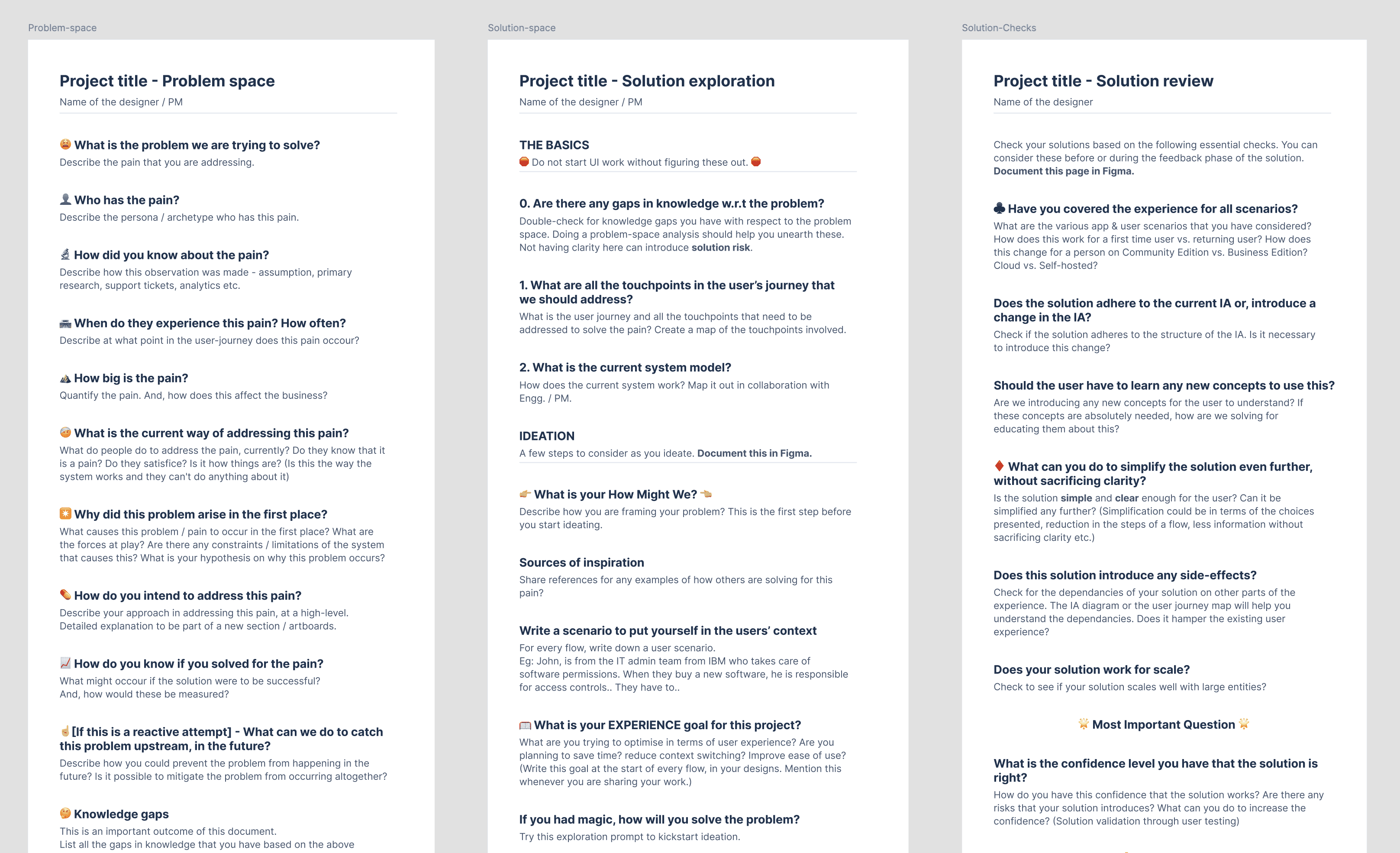
Templates to help designers follow the process, in a remote work environment
I presented to the team that there are a bunch of tools and that they should use these tools given a situation to get the job done effectively. illustrated how to use these tools with the team. This had enabled some designers to start having higher-quality discussions with their peers, asking important questions and starting to produce work that required lesser time in back-and-forth feedback cycles.
However, a few designers were still struggling!
Templates to help designers follow the process, in a remote work environment
I presented to the team that there are a bunch of tools and that they should use these tools given a situation to get the job done effectively. illustrated how to use these tools with the team. This had enabled some designers to start having higher-quality discussions with their peers, asking important questions and starting to produce work that required lesser time in back-and-forth feedback cycles.
However, a few designers were still struggling!
Templates to help designers follow the process, in a remote work environment
I presented to the team that there are a bunch of tools and that they should use these tools given a situation to get the job done effectively. illustrated how to use these tools with the team. This had enabled some designers to start having higher-quality discussions with their peers, asking important questions and starting to produce work that required lesser time in back-and-forth feedback cycles.
However, a few designers were still struggling!
Training designers
To address the issue of low skill and high complexity, I tried training designers to get upto speed. I spent a lot of time in researching courses, books, tutorials that each designer should read in order for them to improve their understanding. I checked in with our Head of People Ops to figure out how to train some of the folks we have.
Having tried this method for 3 months, it didn't yield great success. Not to say that I or the designers didn't try harder. But, in a startup, you do not have the luxury of time for a person to ramp up. At this juncture, I realised that we have to hire high-skilled people who have sufficient task-relevant maturity than wait for people to level-up.
One of the key learnings I have as a Design Leader is to adjust tolerance towards people who take time to level-up and assess if the environment can afford this time in people to level-up. Letting go of people is hard, but is probably the best thing for the employee and the organisation. While it is emotionally intense, it affords an opportunity for the employee to find an environment that is a great fit for their skills instead of continuing to adjust their fit.
Training designers
To address the issue of low skill and high complexity, I tried training designers to get upto speed. I spent a lot of time in researching courses, books, tutorials that each designer should read in order for them to improve their understanding. I checked in with our Head of People Ops to figure out how to train some of the folks we have.
Having tried this method for 3 months, it didn't yield great success. Not to say that I or the designers didn't try harder. But, in a startup, you do not have the luxury of time for a person to ramp up. At this juncture, I realised that we have to hire high-skilled people who have sufficient task-relevant maturity than wait for people to level-up.
One of the key learnings I have as a Design Leader is to adjust tolerance towards people who take time to level-up and assess if the environment can afford this time in people to level-up. Letting go of people is hard, but is probably the best thing for the employee and the organisation. While it is emotionally intense, it affords an opportunity for the employee to find an environment that is a great fit for their skills instead of continuing to adjust their fit.
Training designers
To address the issue of low skill and high complexity, I tried training designers to get upto speed. I spent a lot of time in researching courses, books, tutorials that each designer should read in order for them to improve their understanding. I checked in with our Head of People Ops to figure out how to train some of the folks we have.
Having tried this method for 3 months, it didn't yield great success. Not to say that I or the designers didn't try harder. But, in a startup, you do not have the luxury of time for a person to ramp up. At this juncture, I realised that we have to hire high-skilled people who have sufficient task-relevant maturity than wait for people to level-up.
One of the key learnings I have as a Design Leader is to adjust tolerance towards people who take time to level-up and assess if the environment can afford this time in people to level-up. Letting go of people is hard, but is probably the best thing for the employee and the organisation. While it is emotionally intense, it affords an opportunity for the employee to find an environment that is a great fit for their skills instead of continuing to adjust their fit.
Calibration & Coaching
..
I spent a lot of time going through how designers were thinking about problem spaces, where they've been faltering in applying the design process, instilling a sense of inquiry in them. Results started to show.
As their design outcomes started improving, team members were eager about how they should grow.
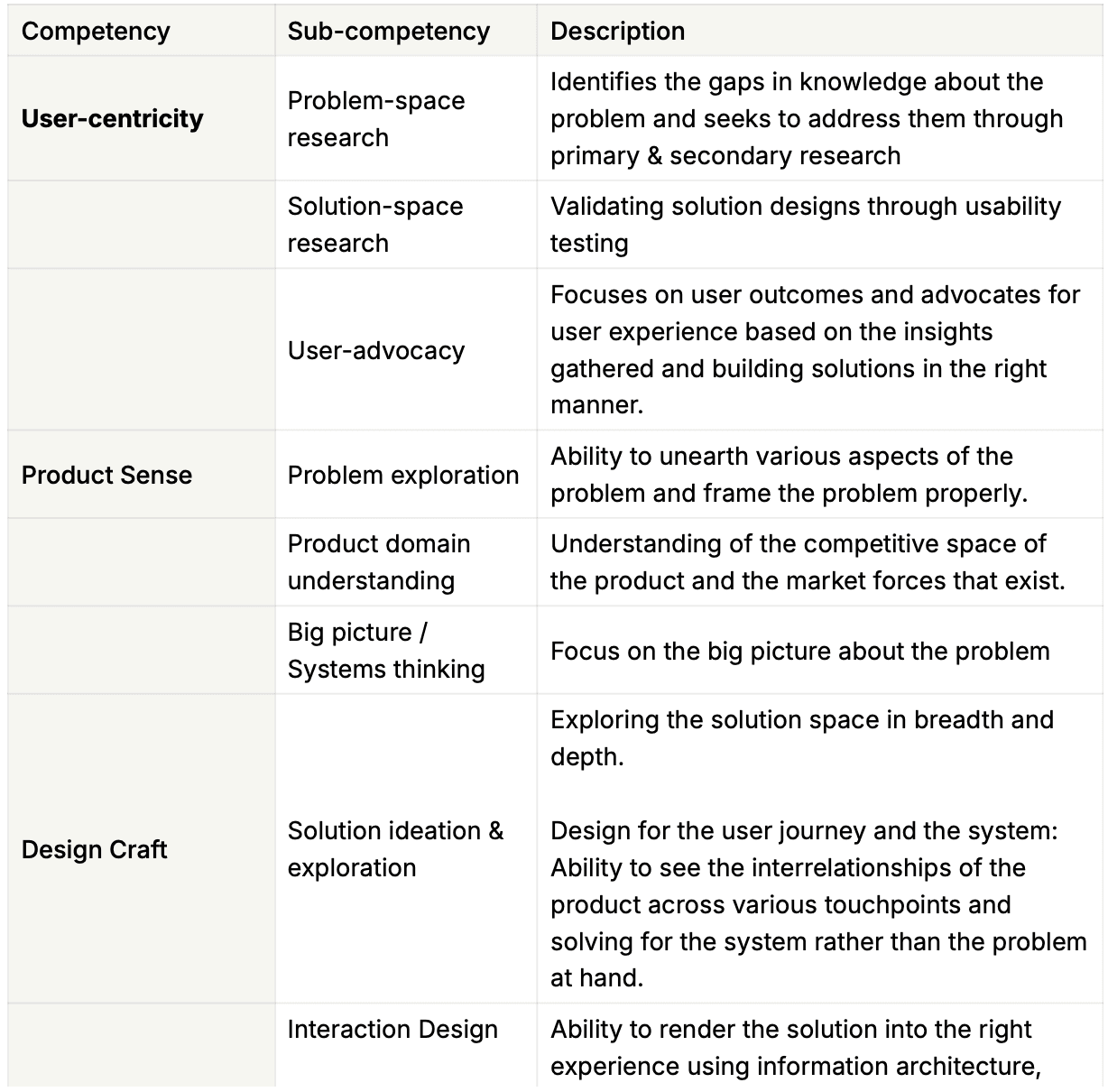
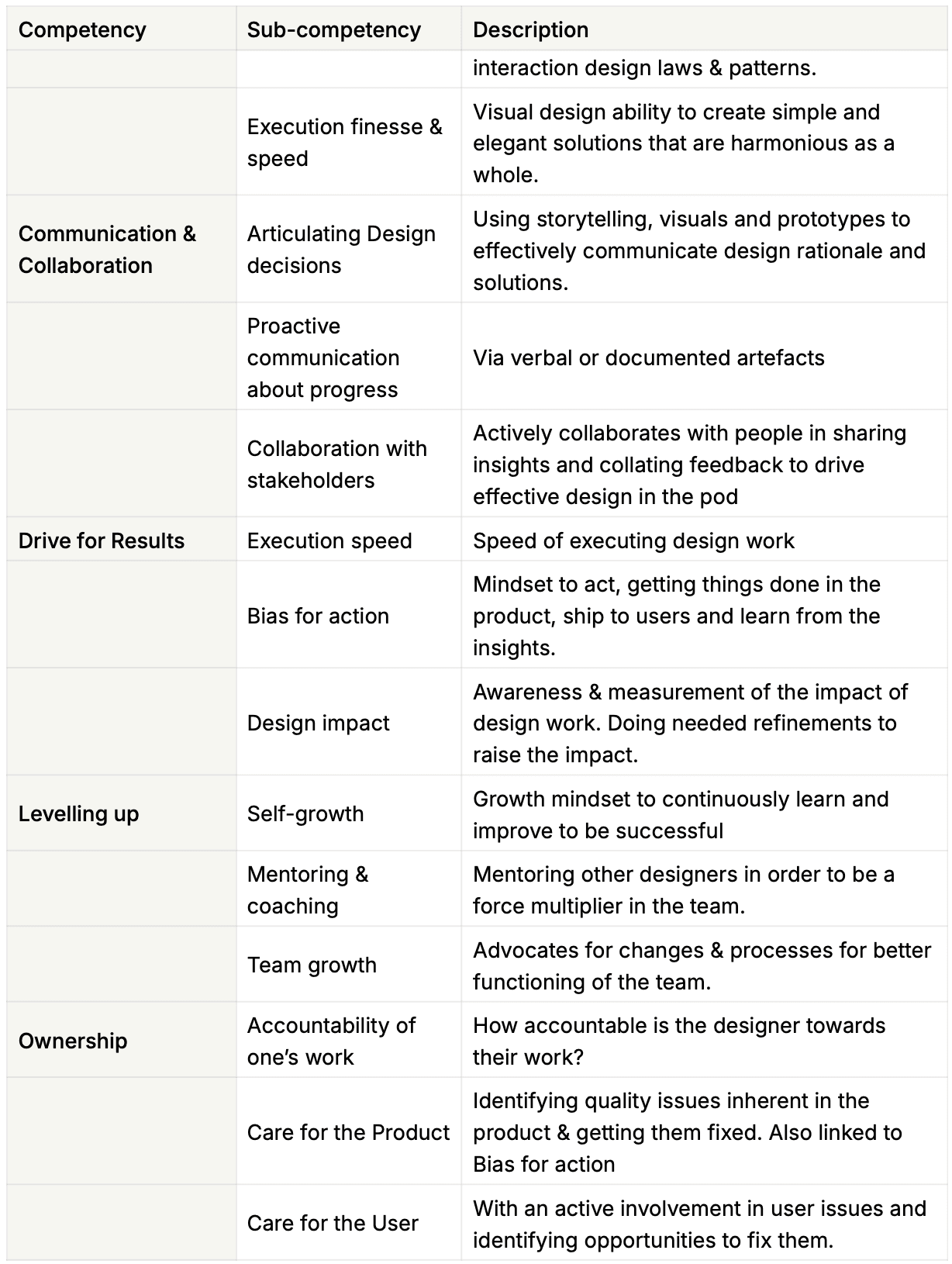
I also quickly realised that it was important for people to have clarity on where they are in terms of their skill and what is it they needed to do to evolve. I created Design competencies for Appsmith and calibrated people with the help of Design managers.
Calibration of people into levels when there weren't any in the first place, is one of the toughest tasks to do for a manager. It took a lot of grit and persuasion to guide people through this process, introduce them to their growth areas, create action plans and set them up on a path to success.
Calibration & Coaching
..
I spent a lot of time going through how designers were thinking about problem spaces, where they've been faltering in applying the design process, instilling a sense of inquiry in them. Results started to show.
As their design outcomes started improving, team members were eager about how they should grow.
I also quickly realised that it was important for people to have clarity on where they are in terms of their skill and what is it they needed to do to evolve. I created Design competencies for Appsmith and calibrated people with the help of Design managers.
Calibration of people into levels when there weren't any in the first place, is one of the toughest tasks to do for a manager. It took a lot of grit and persuasion to guide people through this process, introduce them to their growth areas, create action plans and set them up on a path to success.
Calibration & Coaching
..
I spent a lot of time going through how designers were thinking about problem spaces, where they've been faltering in applying the design process, instilling a sense of inquiry in them. Results started to show.
As their design outcomes started improving, team members were eager about how they should grow.
I also quickly realised that it was important for people to have clarity on where they are in terms of their skill and what is it they needed to do to evolve. I created Design competencies for Appsmith and calibrated people with the help of Design managers.
Calibration of people into levels when there weren't any in the first place, is one of the toughest tasks to do for a manager. It took a lot of grit and persuasion to guide people through this process, introduce them to their growth areas, create action plans and set them up on a path to success.
Through out this process, I operated with a singular intent of how could a person grow into a better version of themselves. I like to believe that this was one of the reasons which created a lot of trust with the team that I had.
More about how I built trust with the team.
"Building trust is the foundation. This will enable people to lower their guard and imbibe. In this state, you do not have to manage. Just coach!"
"Building trust is the foundation. This will enable people to lower their guard and imbibe. In this state, you do not have to manage. Just coach!"
..
Hiring: Play as a Team
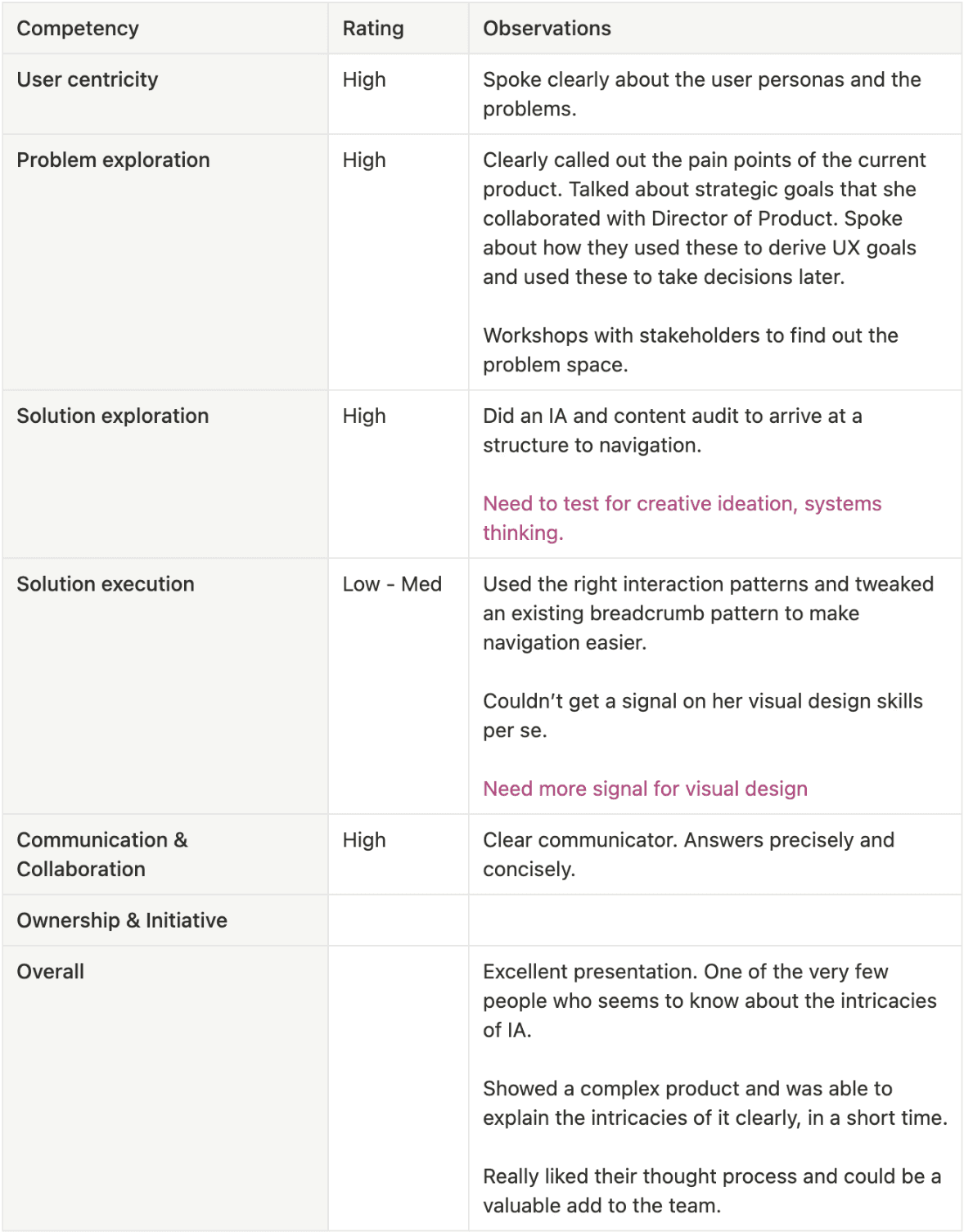
Using the design competencies to get structured feedback from interviewers
In my time at Atlassian, I resonated highly with a company value they had: "Play as a Team". This has been my guiding principle in building and restructuring the design team at Appsmith.
So, I wanted to build a team that is not only skilled but complemented each other in terms of their strengths & areas of improvement. With months of numerous interviews and with the help of the People Ops and a design hiring agency (which played a crucial role in getting highly qualified leads), we were able to hire a principal designer, 2 lead designers and a strong senior designer.
I designed the hiring process to ensure that we are able to assess designers accurately with respect to the role we have. Design competencies played a major role in how we assessed candidates and in reducing individual biases. More about that here.
Hiring: Play as a Team
Using the design competencies to get structured feedback from interviewers
In my time at Atlassian, I resonated highly with a company value they had: "Play as a Team". This has been my guiding principle in building and restructuring the design team at Appsmith.
So, I wanted to build a team that is not only skilled but complemented each other in terms of their strengths & areas of improvement. With months of numerous interviews and with the help of the People Ops and a design hiring agency (which played a crucial role in getting highly qualified leads), we were able to hire a principal designer, 2 lead designers and a strong senior designer.
I designed the hiring process to ensure that we are able to assess designers accurately with respect to the role we have. Design competencies played a major role in how we assessed candidates and in reducing individual biases. More about that here.
Hiring: Play as a Team
Using the design competencies to get structured feedback from interviewers
In my time at Atlassian, I resonated highly with a company value they had: "Play as a Team". This has been my guiding principle in building and restructuring the design team at Appsmith.
So, I wanted to build a team that is not only skilled but complemented each other in terms of their strengths & areas of improvement. With months of numerous interviews and with the help of the People Ops and a design hiring agency (which played a crucial role in getting highly qualified leads), we were able to hire a principal designer, 2 lead designers and a strong senior designer.
I designed the hiring process to ensure that we are able to assess designers accurately with respect to the role we have. Design competencies played a major role in how we assessed candidates and in reducing individual biases. More about that here.
Iteration & refinements
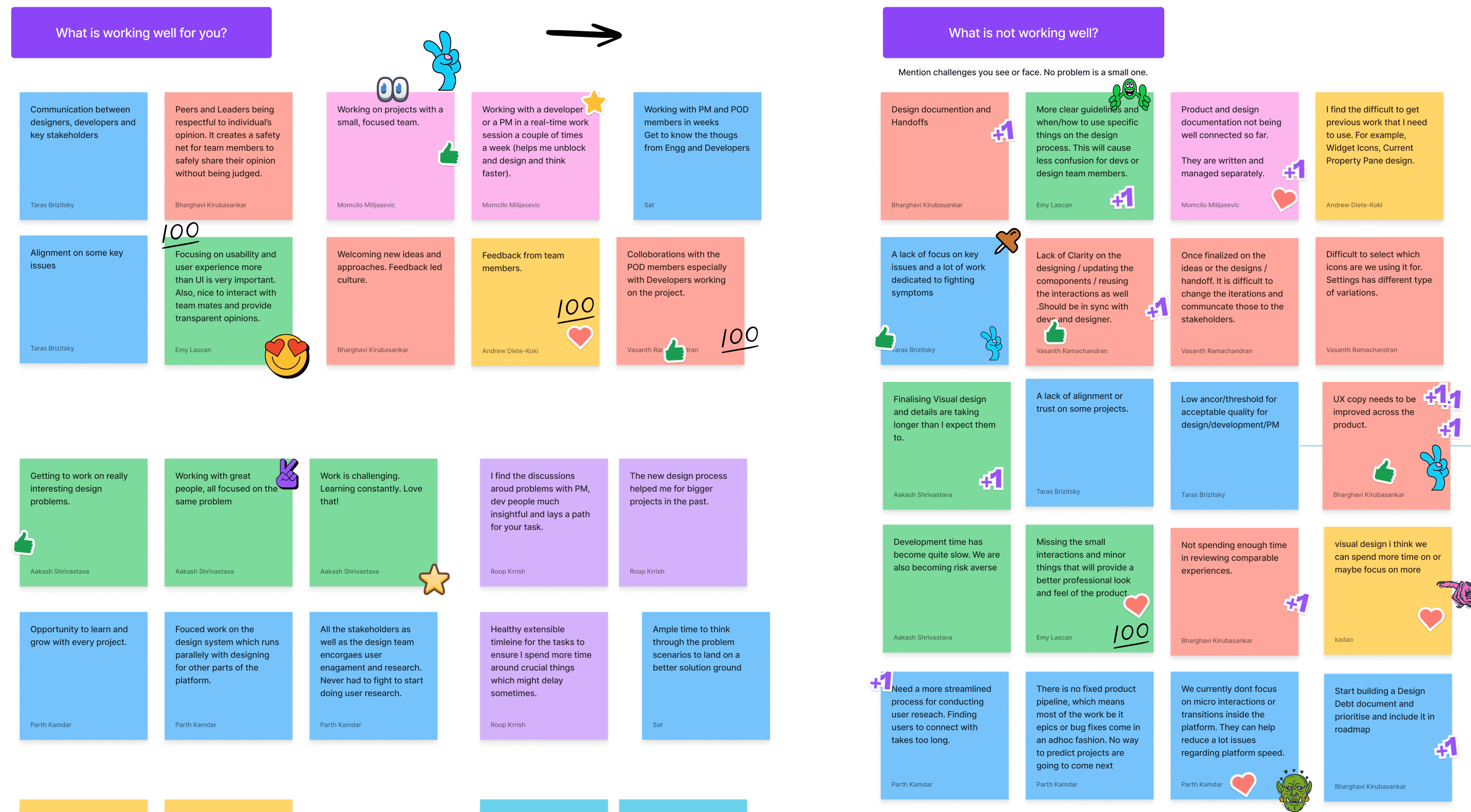
Using 6-month team checkins to get feedback
Iteration & refinements
Using 6-month team checkins to get feedback
Iteration & refinements
Using 6-month team checkins to get feedback
Impact
The design team at Appsmith has become a high-performing team with high talent density, very high ownership and to deliver experience with high quality.
This is assessed by:
Designers driving high-impact product decisions.
Significant reduction in the amount of back-and-forths in iterations
Proposing solutions that increase the chance of the feature being successful (through continuous user testing)
Delivering output that is consistent across the platform.
Impact
The design team at Appsmith has become a high-performing team with high talent density, very high ownership and to deliver experience with high quality.
This is assessed by:
Designers driving high-impact product decisions.
Significant reduction in the amount of back-and-forths in iterations
Proposing solutions that increase the chance of the feature being successful (through continuous user testing)
Delivering output that is consistent across the platform.
..
Impact
The design team at Appsmith has become a high-performing team with high talent density, very high ownership and to deliver experience with high quality.
This is assessed by:
Designers driving high-impact product decisions.
Significant reduction in the amount of back-and-forths in iterations
Proposing solutions that increase the chance of the feature being successful (through continuous user testing)
Delivering output that is consistent across the platform.
Learnings
I learnt immensely about how to build a high-performing team with a lot of intention & iteration. Here are a few key learnings:
People >>> Process. This is true especially for a startup where you need to have very strong ICs that are a great fit with experience and complexity. Process can help raise the overall threshold but it cannot make the designs to shine.
If people operate transactionally and do not show ownership, it is better to let them go sooner. (especially, when you are in an organisation that values high ownership)
Hire for the team and not based on individual merit, alone.
Hire the best people and get out of their way. (This is not really a learning, but something I've always followed which got re-inforced through my journey at Appsmith)
While there were product features that were successful, I'd say building this team is my biggest achievement at Appsmith. And, one that I fondly look back to.
Learnings
I learnt immensely about how to build a high-performing team with a lot of intention & iteration. Here are a few key learnings:
People >>> Process. This is true especially for a startup where you need to have very strong ICs that are a great fit with experience and complexity. Process can help raise the overall threshold but it cannot make the designs to shine.
If people operate transactionally and do not show ownership, it is better to let them go sooner. (especially, when you are in an organisation that values high ownership)
Hire for the team and not based on individual merit, alone.
Hire the best people and get out of their way. (This is not really a learning, but something I've always followed which got re-inforced through my journey at Appsmith)
While there were product features that were successful, I'd say building this team is my biggest achievement at Appsmith. And, one that I fondly look back to.
..
Learnings
I learnt immensely about how to build a high-performing team with a lot of intention & iteration. Here are a few key learnings:
People >>> Process. This is true especially for a startup where you need to have very strong ICs that are a great fit with experience and complexity. Process can help raise the overall threshold but it cannot make the designs to shine.
If people operate transactionally and do not show ownership, it is better to let them go sooner. (especially, when you are in an organisation that values high ownership)
Hire for the team and not based on individual merit, alone.
Hire the best people and get out of their way. (This is not really a learning, but something I've always followed which got re-inforced through my journey at Appsmith)
While there were product features that were successful, I'd say building this team is my biggest achievement at Appsmith. And, one that I fondly look back to.
Building this high-performing team is my biggest achievement at Appsmith.
Building this high-performing team is my biggest achievement at Appsmith.
There is so much more to this story..
It's reserved for in-person conversations.
Other case studies

© VINAY CHILUKURI,
2025
Illustrations from Lukaszadam, Undraw.co
© VINAY CHILUKURI,
2025
Illustrations from Lukaszadam, Undraw.co
© VINAY CHILUKURI,
2025